Travel Tips
How to Explore the Marrakech Medina: Practical Tips
Practical advice for your first days in the Marrakech medina: navigating by landmarks, choosing an official guide, bargaining in the souks, and what to know about dress, photos and getting to your riad.
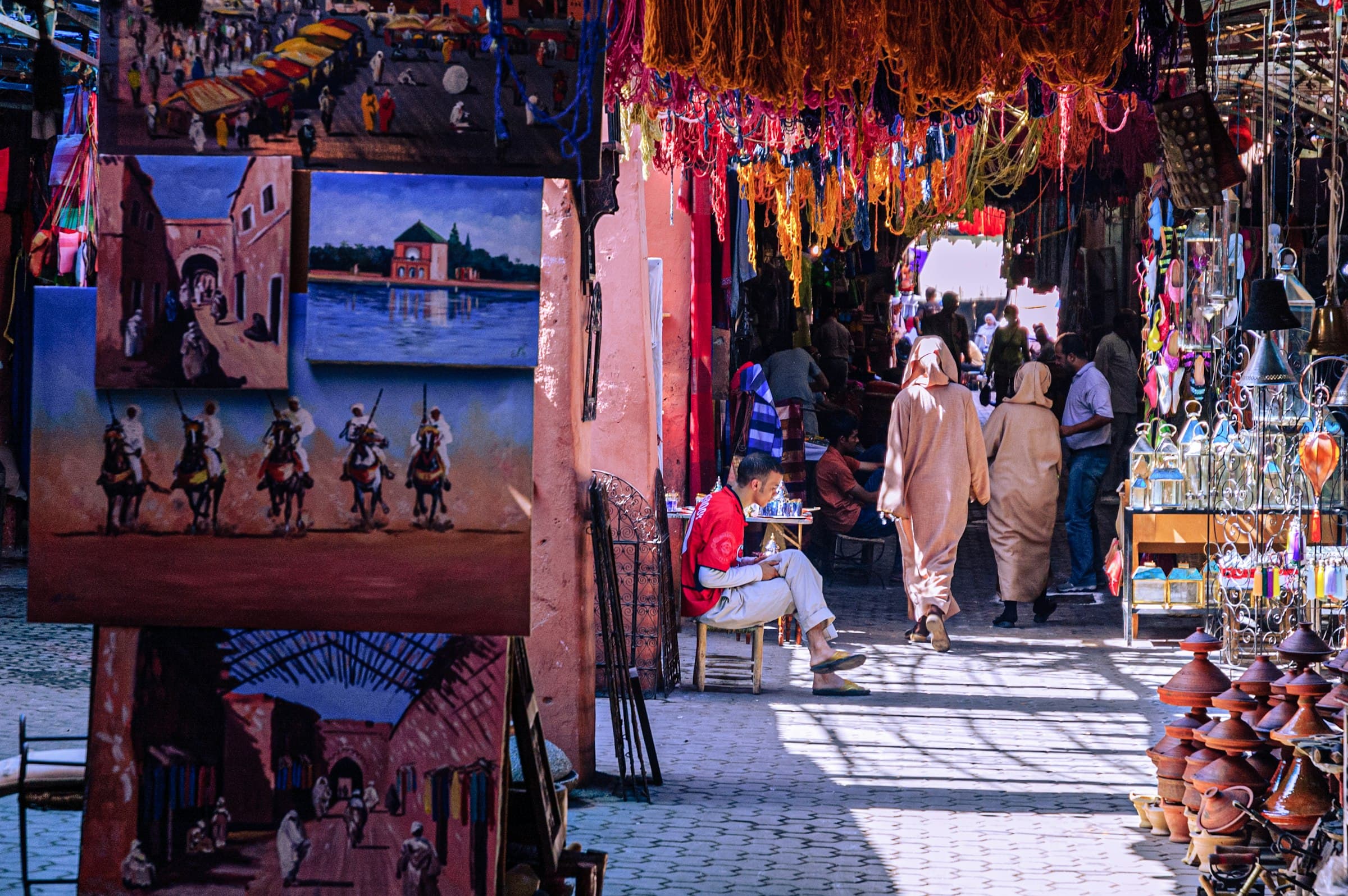
The three things that make the biggest difference in the Marrakech medina are simple: use the Koutoubia minaret and Jemaa el-Fna as your fixed points so getting lost stops being stressful, hire a guide only if they carry an official badge, and carry cash in small amounts with nothing valuable on show. Get those right and the rest of the medina, from the souks to the riad lanes, becomes a pleasure to explore at your own pace.
Why the medina feels hard at first
The walled old city was founded by the Almoravids in the 1070s and is a UNESCO World Heritage Site, and it still works as a living neighbourhood rather than a museum. Alleys narrow, bend and dead-end without warning, signs are patchy, and map apps lose accuracy between high walls. Motorbikes and hand carts share the same lanes as pedestrians. None of this is dangerous, but it is disorienting on day one. The tips below are about turning that disorientation into something you can manage. For the wider picture of the city, start with our Marrakech destination guide.
1. Navigate by landmarks, not by street names
- Use the Koutoubia minaret as your compass. It rises 77 metres beside Jemaa el-Fna and is visible from much of the southern medina and from most rooftop terraces. If you can see it, you know roughly where the main square is.
- Treat Jemaa el-Fna as home base. Most souk routes begin on its northern edge, so when you are lost, ask for "Jemaa el-Fna" and follow the flow of people back.
- Download an offline map before you go, but expect it to drift in the narrowest alleys. Use it for direction, not for turn-by-turn precision.
- Follow the busiest lane. Main souk streets carry the most foot traffic; quiet, residential alleys (derbs) are often dead ends.
- Keep to the side when you hear an engine or a shout of "balak". It means a motorbike, donkey cart or porter is coming through.
2. Guides: official or nothing
Young men offering to show you the way, or telling you a road is closed, are a well-known feature of the medina. The UK government's travel advice notes that people posing as official guides commonly approach tourists, and recommends hiring only guides who carry an official badge issued with the local authority's permission. A polite, firm "no, thank you" and walking on with purpose is usually enough. If you want a guide, and a half-day with a good one is a smart way to orient yourself, arrange it through your riad or hotel so their credentials are checked.
3. The souks: how to shop without stress
The souks fan out north of Jemaa el-Fna. Morocco's national tourist office highlights Souk Semmarine for crafts, candles and earthenware and Souk Attarine for metalwork, but you will also pass through lanes devoted to leather, textiles, spices and lanterns.
- Bargaining is expected in the souks. Decide what an item is worth to you before you ask the price, and be happy to walk away. Buying at the price that feels fair to you matters more than chasing the lowest possible number.
- Check what you are handed. UK travel advice warns about traders substituting lower-quality goods for the item you chose, so watch it being wrapped.
- Carry cash. The dirham is a closed currency, so you obtain it in Morocco rather than before you travel, and small stalls rarely take cards. Use ATMs attached to banks rather than standalone machines in quiet lanes.
- If the souks feel like too much, the modern Gueliz district outside the walls has fixed-price shops and international brands.
4. Jemaa el-Fna by day and by night
UNESCO lists the cultural space of Jemaa el-Fna as intangible heritage, and it changes character through the day. In daylight you will find henna artists, traditional medicine sellers, water carriers and fresh juice stands. From late afternoon, storytellers, Gnaoua musicians and other performers gather crowds, and rows of food stalls set up and run well into the night.
- Photograph with permission. UK advice is to ask before photographing people. Performers and animal handlers in the square will usually expect a tip if you take their picture, so agree first or keep the camera down.
- Pick food stalls where locals are eating and where food is cooked in front of you.
- Watch your bag in the crowds. Pickpocketing and bag-snatching, including theft by passing motorcyclists, are common in the medina's busiest areas, so carry only what you need and wear bags across your body.
5. Dress, alcohol and respect
- Dress modestly in the medina. Covering shoulders and knees is the norm for women, and men generally avoid short shorts. Flat, closed shoes cope far better with the cobbles than sandals or heels.
- Mosques are for worship. The Koutoubia is an active mosque, so you admire it and its gardens from outside. The Ben Youssef Madrasa, a former Koranic school, and the Bahia Palace are the places to see the interior craftsmanship of carved cedar, stucco and zellige tilework.
- Alcohol belongs in licensed venues only. Drinking it in the street or other public places is illegal and can lead to arrest.
- Ramadan changes the rhythm. The next Ramadan is expected to start in February 2027. Travelling then is fine, but avoid eating, drinking or smoking in public during daylight and check opening hours, which often shift.
- Leave the drone at home unless you have permission from Morocco's aviation authority.
6. Arriving and getting around
- Let your riad arrange the airport transfer. Many riads sit down lanes that cars cannot enter, so the driver will stop at the nearest gate or square and a member of staff walks you in. Arriving late at night without this can be confusing.
- Save your riad's location and phone number before you leave the airport, and photograph the nearest landmark on your first walk out.
- For petit taxis, agree the fare before you set off or check the meter is running. Taxis cannot drive inside most of the medina, so ask to be dropped at the nearest gate.
- Book popular sights ahead in busy months. The Majorelle Garden in particular is worth booking ahead in high season.
7. Timing your days
Spring and autumn are the most comfortable seasons for walking the medina; in midsummer, do your exploring early and late and spend the hot afternoon hours in your riad's courtyard or on a shaded roof terrace. Three days is enough to cover the medina, the gardens and a rooftop sunset or two before heading to the Atlas Mountains or the desert, a route covered in our Morocco guide.
Putting it together
The medina rewards travellers who slow down, stay curious and set a few ground rules for themselves on the first morning. If you enjoy trips built around history, craft and food rather than a checklist of sights, our cultural travel style collects the places that suit you, and Marrakech also works well as a short city break. Tell us your dates and interests through the inquiry form and we can suggest how to fit Marrakech into a wider Morocco itinerary.
Inspired? Let's plan it.
Tell us what caught your eye and a travel expert will design a trip around it.
Plan My Trip