Tanzania
Serengeti & Zanzibar
10 Days · Serengeti · Zanzibar
- Serengeti game drives
- Stone Town walking tour
- East coast beach time
Price on request
Request a Quote The Serengeti's vast plains host most of the Great Migration's cycle, from calving season to river crossings.
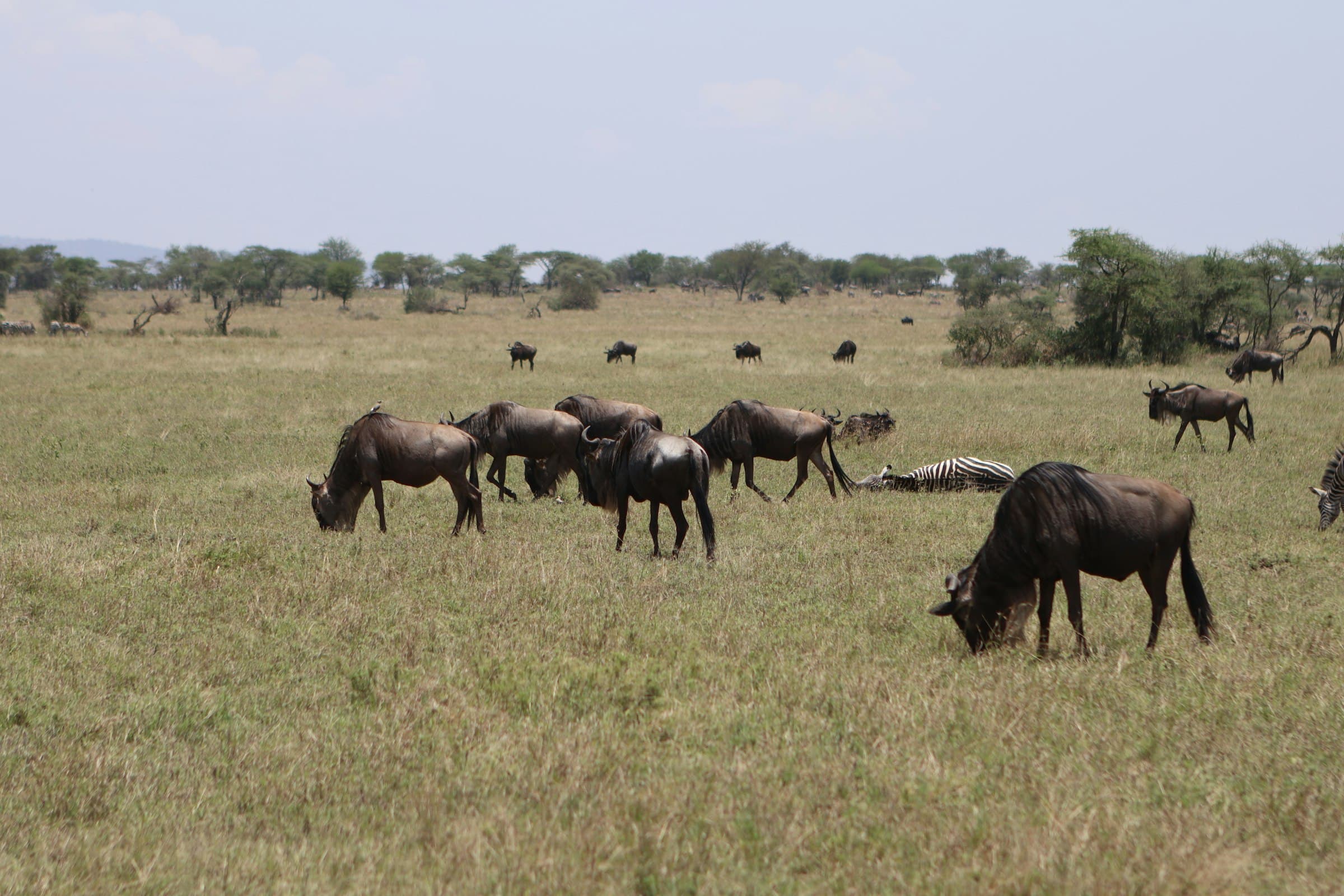
The Serengeti National Park forms the largest part of an ecosystem shared with Kenya's Maasai Mara, and its scale means different sectors suit different months. The southern plains, near Ndutu, are known for the migration's calving season, when hundreds of thousands of wildebeest give birth within a short window. The central Seronera area holds resident wildlife year-round, while the western corridor and northern sector see the migration pass through as herds move toward and across the Mara River.
Because the herds follow rainfall rather than a fixed timetable, timing a Serengeti visit around a specific event, such as calving or a river crossing, means choosing the right sector and month together rather than simply picking a season; our migration guide sets this out region by region. Beyond the migration, the Serengeti supports large resident populations of lion, leopard and cheetah, making it a rewarding safari destination at any time of year. Balloon safaris are also on offer here, launching before dawn over the plains for a different perspective on the herds and the landscape's sheer scale.
Many itineraries combine the Serengeti with the Ngorongoro Crater on the way in or out, and with time on Zanzibar afterward; our Serengeti & Zanzibar itinerary follows this route. The park's name derives from the Maasai word for endless plains, an apt description of the horizon-to-horizon grassland that defines its central and southern reaches, mirrored across the border by Kenya's own Maasai Mara.
Plan a trip to Serengeti
Plan My TripTiming depends on which part of the ecosystem you want to see: roughly January to March suits the southern plains' calving season, while June to October suits the western corridor and northern sector, where river crossings occur.
Head to the southern plains around Ndutu roughly January to March for newborn wildebeest.
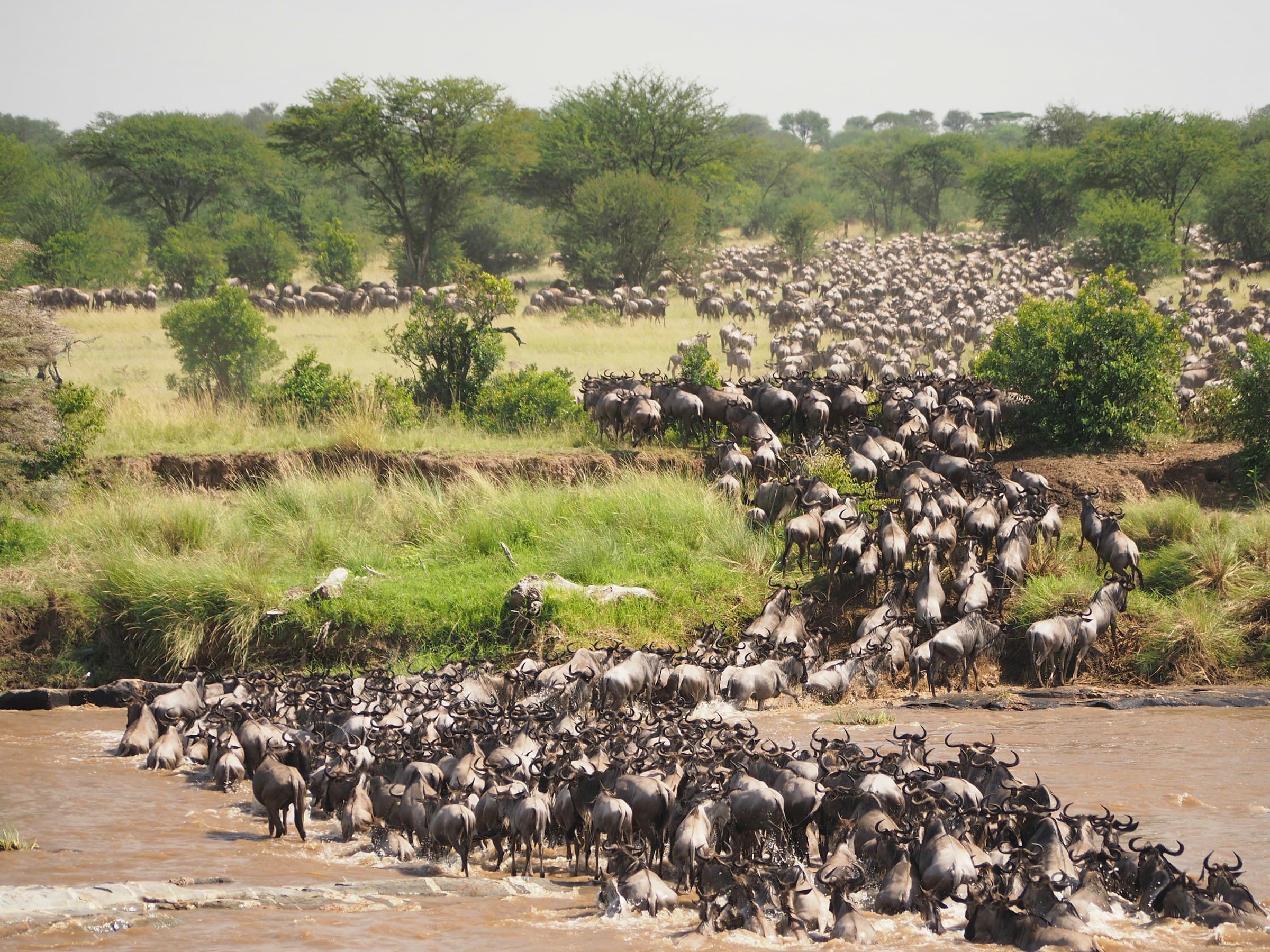
The western corridor and Mara River area see crossings roughly from June through October.
Drift over the plains before landing to a bush breakfast.
Add a day in the nearby crater for dense, easily viewed wildlife.
Tanzania
10 Days · Serengeti · Zanzibar
Guide
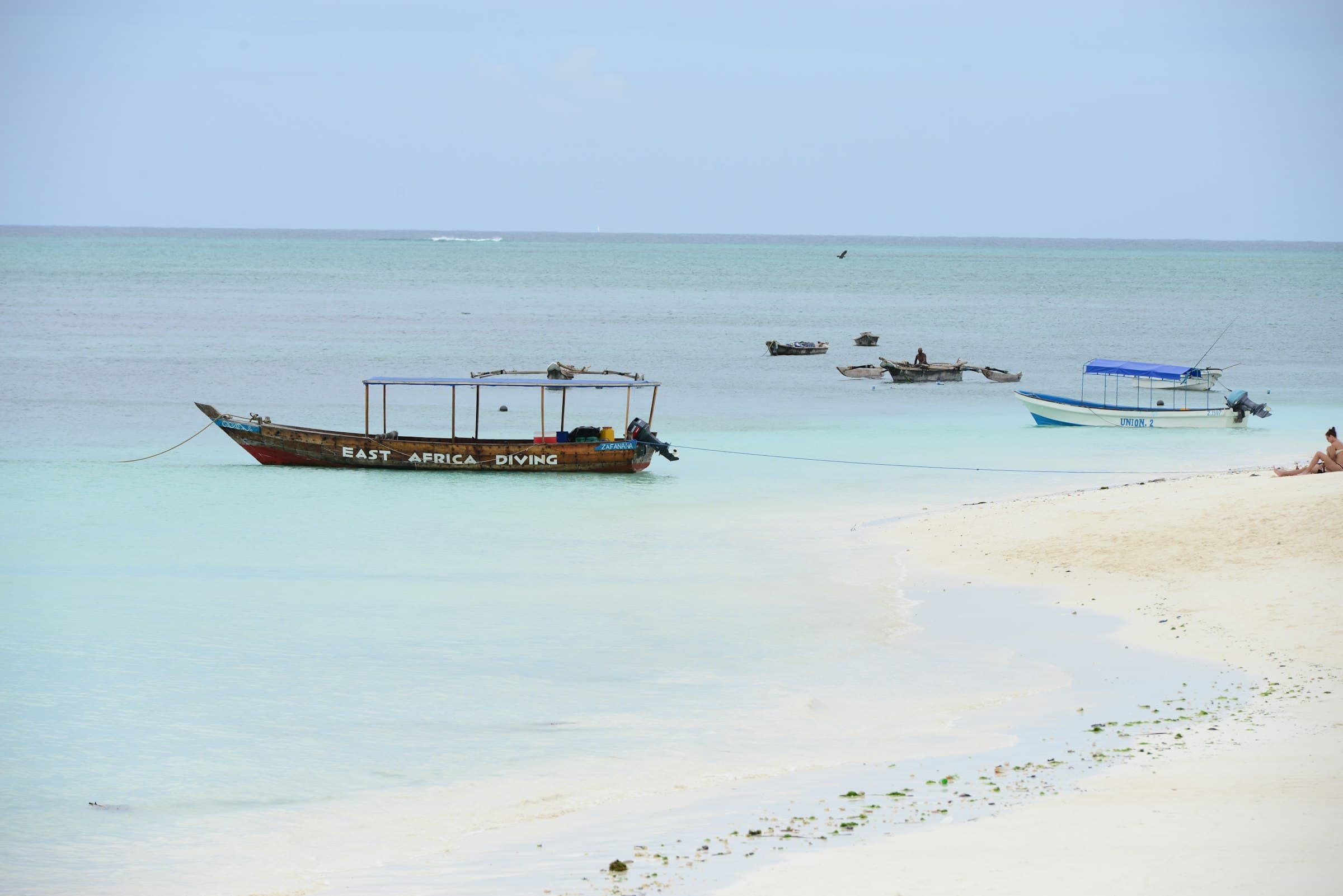
A comparison of Zanzibar's main beach areas, from the reliably swimmable north to the kitesurfing hub of Paje, to help you choose where to base your trip.

Travel Tips
What to pack for your first safari, from luggage limits on light aircraft to the layers you'll actually wear on early-morning game drives.
Guide
A month-by-month guide to where the Great Migration herds are likely to be, from calving season in the southern Serengeti to river crossings in the Maasai Mara.
It depends on the month; the southern plains suit the January-to-March calving season, while the western and northern areas suit the mid-year river crossings.
Yes; it holds large resident populations of lion, leopard and cheetah throughout the year.
Yes; it is a common pairing, with a short flight connecting the two.
Ready for your next adventure?
Whether you're looking for a weekend escape or an unforgettable journey, SafiriFlow can help you plan it.
Start Planning