Kenya
Classic Kenya Safari
7 Days · Maasai Mara · Amboseli
- Expert local guide
- Mara-Amboseli flight
- Big cats & elephants
Price on request
Request a Quote The Maasai Mara is Kenya's most famous reserve, known for dense predator populations and the Great Migration's river crossings.
The Maasai Mara National Reserve forms the northern reach of the same ecosystem as Tanzania's Serengeti, and the two are best understood as a single landscape divided by a border. Open grassland, scattered acacia trees and the Mara and Talek Rivers define the terrain, supporting one of Africa's densest concentrations of lion, cheetah and other predators year-round, independent of the migration.
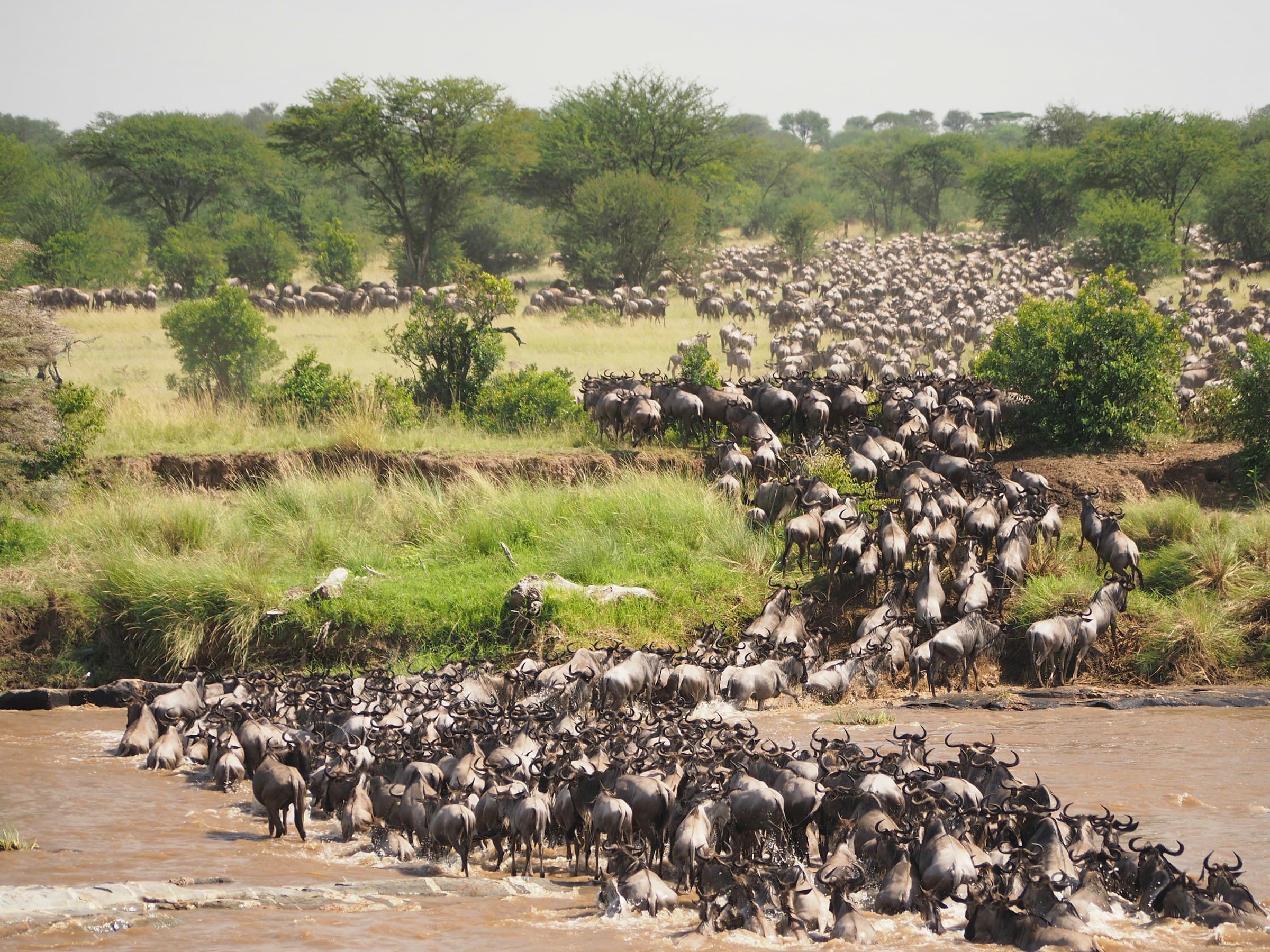
Between roughly July and October, more than a million wildebeest and zebra move north from the Serengeti into the Mara in search of fresh grazing, and it is here that the migration's most watched spectacle plays out: herds gathering at the banks of the Mara River before crossing through crocodile-filled water. Outside these months, the Mara's resident wildlife, from elephant to giraffe, remains reliably visible, and the reserve's conservancies on its borders offer quieter game viewing with activities such as night drives and walking safaris not permitted inside the main reserve. Our Classic Kenya Safari is built around several nights here.
The reserve sits within Maasai community land, and several camps and conservancies work directly with local communities, offering visits to Maasai villages alongside game drives for travellers interested in the region's culture as well as its wildlife. Hot-air balloon safaris at dawn are a popular way to see the plains and any migration herds from above before landing to a bush breakfast. Many itineraries pair a stay here with time in Amboseli or on the coast for a broader view of Kenya beyond a single reserve.
Plan a trip to Maasai Mara
Plan My TripRiver crossings typically peak between July and October, when herds arriving from the Serengeti gather at the Mara River. Resident wildlife is reliably visible year-round, making the reserve rewarding outside migration season too.
Position at known crossing points to watch herds brave the river during migration months.
The Mara holds a high density of lion, cheetah and leopard year-round.
Drift over the plains at dawn before landing to a bush breakfast.
Learn about local traditions and daily life on community land bordering the reserve.
Kenya
7 Days · Maasai Mara · Amboseli

Travel Tips
What to pack for your first safari, from luggage limits on light aircraft to the layers you'll actually wear on early-morning game drives.
Guide
A month-by-month guide to where the Great Migration herds are likely to be, from calving season in the southern Serengeti to river crossings in the Maasai Mara.
Crossings typically peak between July and October, though exact timing depends on rainfall and herd movement each year.
Yes; the reserve supports resident predator and herbivore populations year-round, independent of the migration.
The conservancies border the main reserve, generally allow fewer vehicles per sighting, and permit activities such as night drives and walking that are restricted inside the reserve itself.
Ready for your next adventure?
Whether you're looking for a weekend escape or an unforgettable journey, SafiriFlow can help you plan it.
Start Planning