
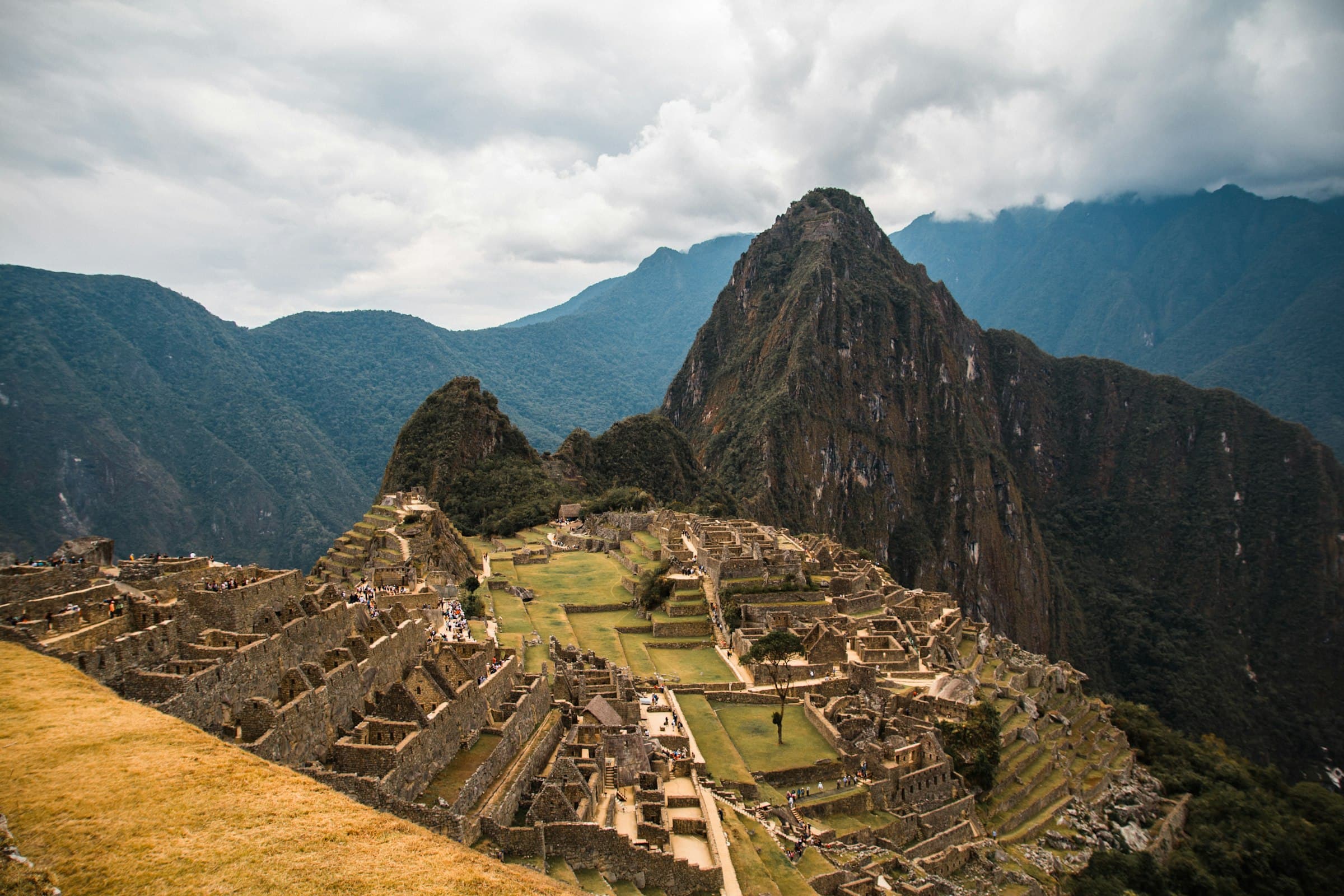
Machu Picchu is the fifteenth-century Inca citadel perched on a mountain ridge above Peru's Sacred Valley.
A citadel above the clouds
Machu Picchu sits on a narrow ridge between two peaks high above the Urubamba River, built in the fifteenth century and never found by Spanish colonisers, which is part of why it survives in such complete form today. Its terraces, temples and residential sections remain remarkably intact, set against a backdrop of cloud forest and surrounding mountains.
Getting to the citadel
Most visitors reach Machu Picchu by train from Cusco or the Sacred Valley to the town of Aguas Calientes, followed by a short bus ride up to the site itself, though multi-day treks such as the classic Inca Trail or the alternative Salkantay route approach on foot through mountain passes and cloud forest for a more immersive arrival. Along either route, the Sacred Valley's villages, markets and smaller Inca ruins at Pisac and Ollantaytambo add depth to the journey, all covered within our wider Peru guide. Arriving at first light, before the bulk of day-trippers reach the site from Cusco, generally offers quieter viewpoints and softer morning light over the ruins.
Altitude, permits and timing
Cusco's high altitude means most itineraries build in time to acclimatise before continuing to Machu Picchu, which sits considerably lower and is generally easier on the body once you arrive. The dry season, roughly May to September, offers the clearest skies and firmest trekking conditions, and permits for the Inca Trail are limited and often booked out months ahead, particularly in these peak months; the trail closes each February for maintenance. A separate ticket and guide are required to climb the adjacent peaks of Huayna Picchu or Machu Picchu Mountain, both of which offer higher viewpoints over the citadel for those with a head for heights. Our style guide to adventure travel is worth reading when comparing trekking routes to the site.
Plan a trip to Machu Picchu
Plan My TripWhen to go
The dry season, roughly May to September, offers the clearest skies and firmest trekking conditions, though it is also when permits and train tickets sell out fastest. The Inca Trail closes each February for maintenance.
Things to do
- 01
Arrive at first light
Beat the bulk of day-trippers from Cusco for quieter viewpoints over the ruins.
- 02
Trek the Inca Trail
Approach the citadel on foot over several days through mountain passes and cloud forest.
- 03
Climb Huayna Picchu or Machu Picchu Mountain
Add a separate permit for higher viewpoints over the site.
- 04
Explore the Sacred Valley en route
Stop at Pisac and Ollantaytambo's markets and ruins on the way to Aguas Calientes.
FAQs
Do I need to book Machu Picchu tickets in advance?
Yes; entry tickets and, for the Inca Trail, trekking permits are limited and often sell out months ahead in peak season.
What is the best time to visit Machu Picchu?
The dry season, roughly May to September, offers the clearest skies and firmest trekking conditions.
How do I deal with the altitude?
Most itineraries build in one to two days to acclimatise in Cusco before continuing to Machu Picchu, which sits at a lower elevation.
Ready for your next adventure?
Let's Plan Your Dream Trip
Whether you're looking for a weekend escape or an unforgettable journey, SafiriFlow can help you plan it.
Start Planning