Comparison
Inca Trail vs Train to Machu Picchu: Which Should You Choose?
Train or trek? How the classic Inca Trail, the two-day Km 104 route and the train to Aguas Calientes compare on time, fitness, permits and timing, and who each one suits.
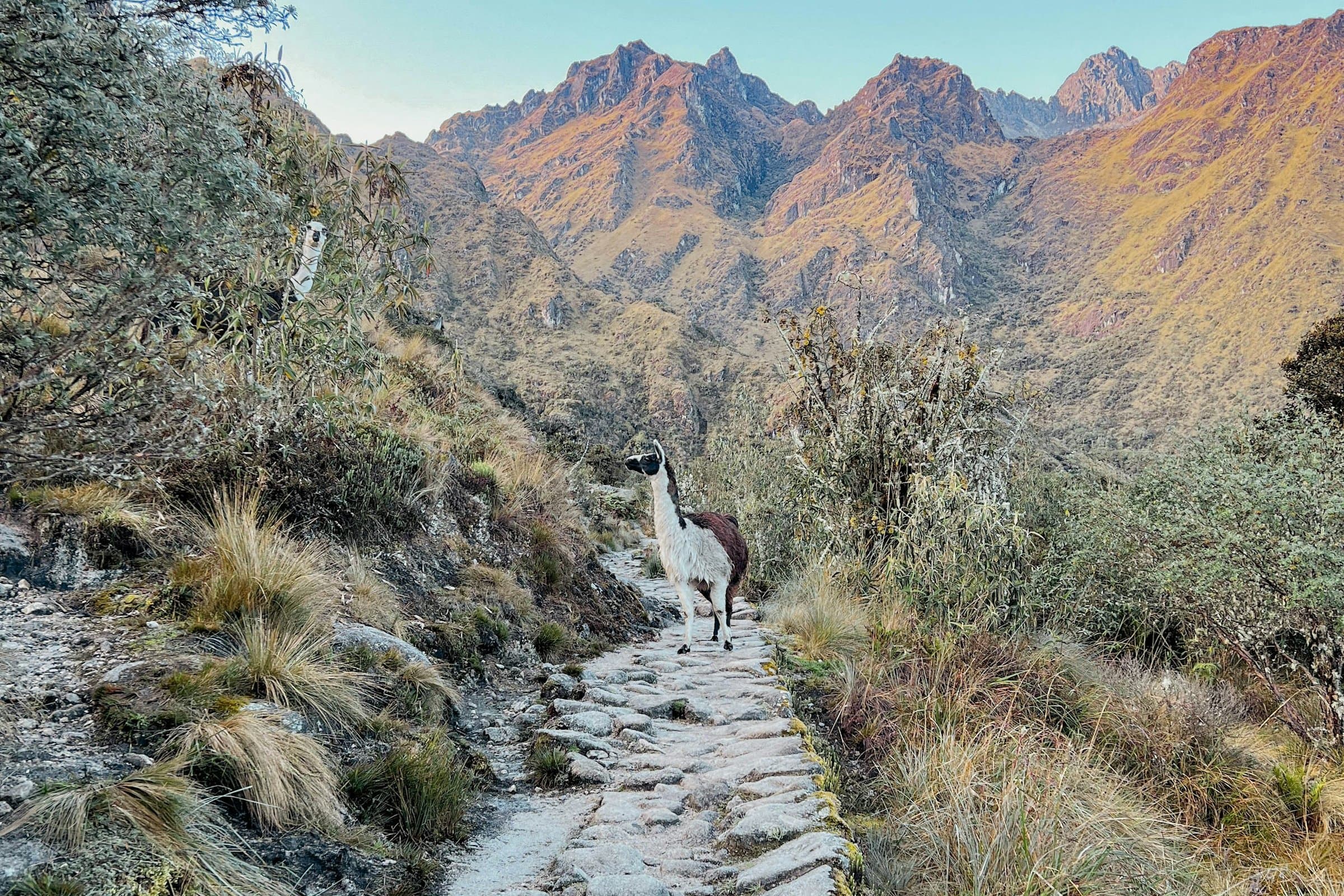
Take the train to Machu Picchu if your time is short, your dates are fixed late, or you want your energy for the site itself. Hike the classic Inca Trail if you can plan months ahead, are fit enough for several long days at high altitude, and want to arrive on foot through the Inca sites that the train passes below. If you want a taste of the trail without the camping, the two-day route that starts at Km 104 sits neatly between the two.
Short answer
The train and the trail end at the same citadel, but they are different trips. The train is a scenic ride of a few hours along the Urubamba River from Ollantaytambo or the Cusco area to Aguas Calientes, followed by a short bus ride up to the site. The classic Inca Trail is an organised four-day, three-night trek from Km 82 over high Andean passes, with camping each night, that ends at the Sun Gate above the ruins. Peru's trail regulations require every trekker to go with an authorised agency and an official guide, permits are limited per day, and the whole Inca trail network closes every February for maintenance. None of that applies to the train.
At a glance
| Train | Classic Inca Trail | Two-day trail (Km 104) | |
|---|---|---|---|
| Time to the site | A few hours from Ollantaytambo or Cusco | 4 days, 3 nights | 2 days, 1 night |
| Physical demand | Low | High, with a pass above 4,200 m | Moderate, a steep day of walking |
| Planning horizon | Weeks | Months, especially for May to September | Months in peak season |
| How you book | Train ticket plus a named site ticket | Only through an authorised agency, with an official guide | Only through an authorised agency, with an official guide |
| Where you sleep | A hotel in Aguas Calientes or back in the Sacred Valley | Designated trail campsites | Usually a hotel in Aguas Calientes |
| February | Runs as normal | Closed for maintenance | Closed for maintenance |
Choose the train if…
You are short on time. Trains run from Ollantaytambo in the Sacred Valley, a ride of roughly one and three-quarter hours, and from Poroy near Cusco, closer to three and a half hours. That makes a same-day visit from the Sacred Valley possible, though most travellers are happier sleeping a night in Aguas Calientes and going up early the next morning.
You are booking late. Train seats and site tickets can sell out in the dry season, but they are far easier to secure at short notice than trail permits, which are released in limited numbers and often go months ahead for May to September.
Altitude or fitness is a concern. The train follows the river valley down towards the citadel, which UNESCO puts at 2,430 metres, noticeably lower than Cusco. You avoid the long climbs and cold nights of the trail entirely.
You want more time at the site. Train travellers choose their own entry slot and circuit on the official ticket. Arriving fresh, ideally on an early slot, you can take in the Panoramic, Classic or Royalty circuits properly, or add a separate ticket for Huayna Picchu or Machu Picchu Mountain.
You want comfort. Operators run several service levels, from standard carriages to panoramic-window cars, so the journey itself can be part of the experience rather than just transport.
Choose the Inca Trail if…
The walk is the point. The classic route links a chain of Inca sites you cannot reach by rail, including Wiñaywayna and Phuyupatamarca, through a landscape that shifts from high puna grassland to cloud forest. You reach the Intipunku, the Sun Gate, on the final morning and see the citadel from above before you walk down into it.
You can commit early. Permits are personal, tied to your name and a fixed date, and can only be bought through an authorised agency. They cannot be changed to a different date or a different person, so the trek suits travellers whose dates are firm.
You are fit and have acclimatised. The hardest day crosses Warmiwañusqa, often called Dead Woman's Pass, at just over 4,200 metres, higher than Cusco. Plan at least two days in Cusco or the Sacred Valley before you start, and train with long, steep day hikes at home.
You are comfortable camping. Nights are spent at designated campsites along the route, and camping anywhere else is not permitted. Agency teams of cooks and porters carry the camp, which is regulated and registered, but you still carry a daypack and deal with cold early starts.
You understand the site entry rules. Under the 2026 rules, visitors arriving from the Inca trail network enter the citadel on a set route within the Royalty circuit, using a quota reserved for trekkers. Ask your agency to confirm exactly which route and time your entry covers.
The middle option: the two-day trail
Peru's trail regulations set out a shorter route starting at Chachabamba, Km 104, with one night included. You leave the train at Km 104, walk a steep day past Wiñaywayna to the Sun Gate, sleep in Aguas Calientes and visit the citadel properly the next morning. It gives you the arrival on foot and the Sun Gate view without the camping or the high pass. It is also run only by authorised agencies, has its own lower daily limit, and closes in February like the rest of the network.
When each works best
The dry season, roughly May to September, brings the clearest views and firmest trail conditions on both options, and it is also when permits, trains and site tickets go fastest. The shoulder months of April and October can be a good compromise. From November to March the rains increase, trail days get muddier and cloud is more likely to hide the view from the Sun Gate. In February the trail network is closed, so the train is the only realistic way in that month.
Doing both
You can combine them. A common pattern is to hike the trail in, sleep in Aguas Calientes, and ride the train back out to Ollantaytambo or Cusco, which saves a long return walk and gives you a second look at the valley. If you are building a wider Peru trip, put the Sacred Valley between Cusco and Machu Picchu so you acclimatise on the way. Our adventure travel and cultural travel pages show how a trek or a slower, site-focused visit can fit into a longer journey, and our team can advise on which fits your dates when you send an inquiry.
Practical notes
- Tickets are personal. Machu Picchu site tickets are issued in your name for a fixed date, time and circuit. Carry the same passport you used to buy them.
- Dates cannot be moved. Neither site tickets nor trail permits can be changed to a new date or a new name, so confirm flights before you pay.
- Check current rules. Peru's Ministry of Culture adjusts circuits, entry routes and daily limits from time to time. Check with your agency or the official ticket platform shortly before you travel.
Inspired? Let's plan it.
Tell us what caught your eye and a travel expert will design a trip around it.
Plan My Trip