Guide
The Great Migration Month by Month: When and Where to See It
A month-by-month guide to where the Great Migration herds are likely to be, from calving season in the southern Serengeti to river crossings in the Maasai Mara.
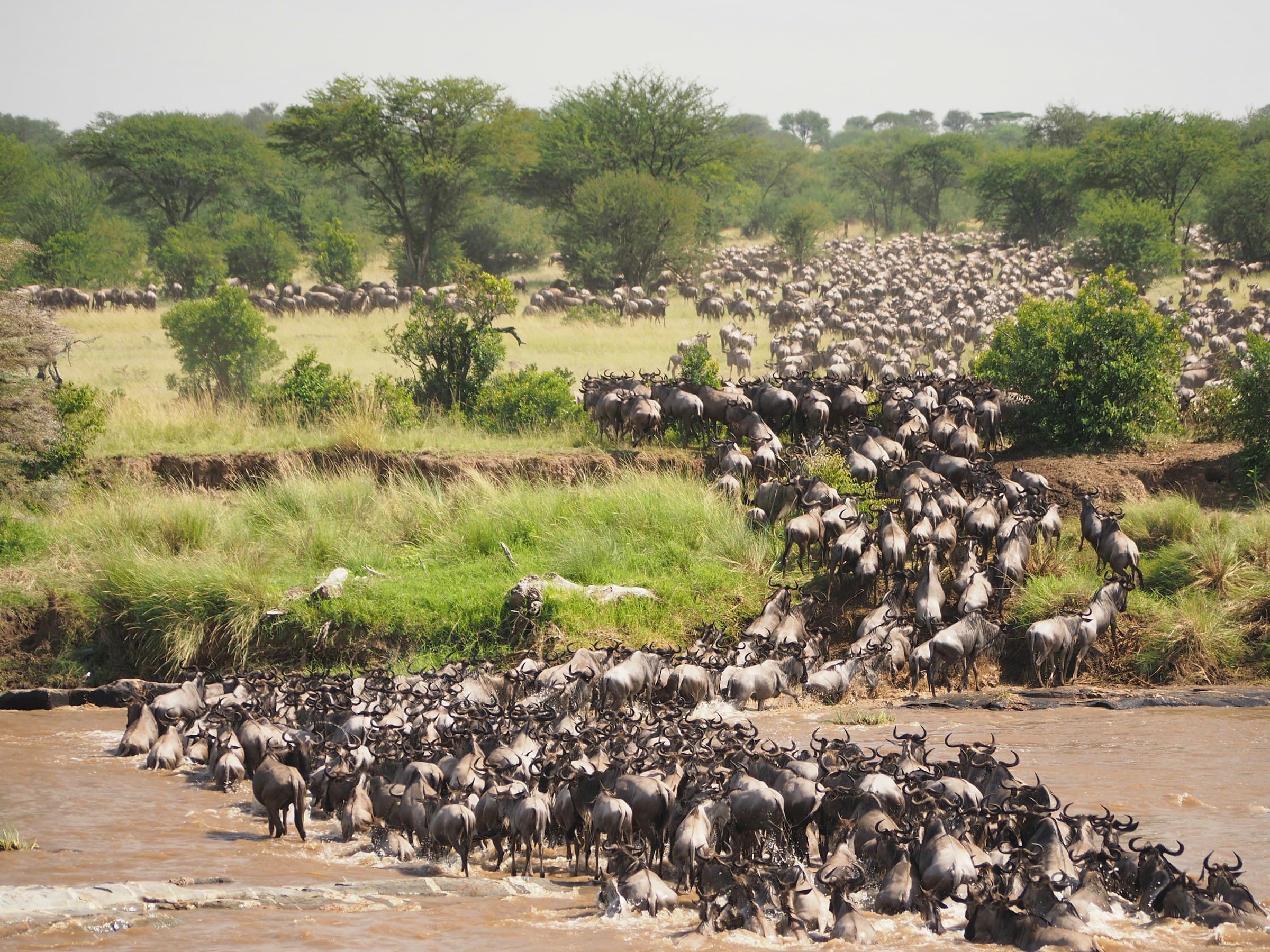
The Great Migration follows a broadly predictable, roughly circular route between Tanzania's Serengeti and Kenya's Maasai Mara, driven by rainfall and grazing rather than a fixed calendar, so the honest answer to "when should I go" is: it depends which chapter of the story you want to see. Herds calve in the southern Serengeti around February and March, then drift north through the year, arriving at the Mara river crossings roughly between July and October before turning south again as the short rains begin. No two years match exactly, and travelers who build in a few flexible days near the likely crossing points see the most dramatic moments.
How the migration actually moves
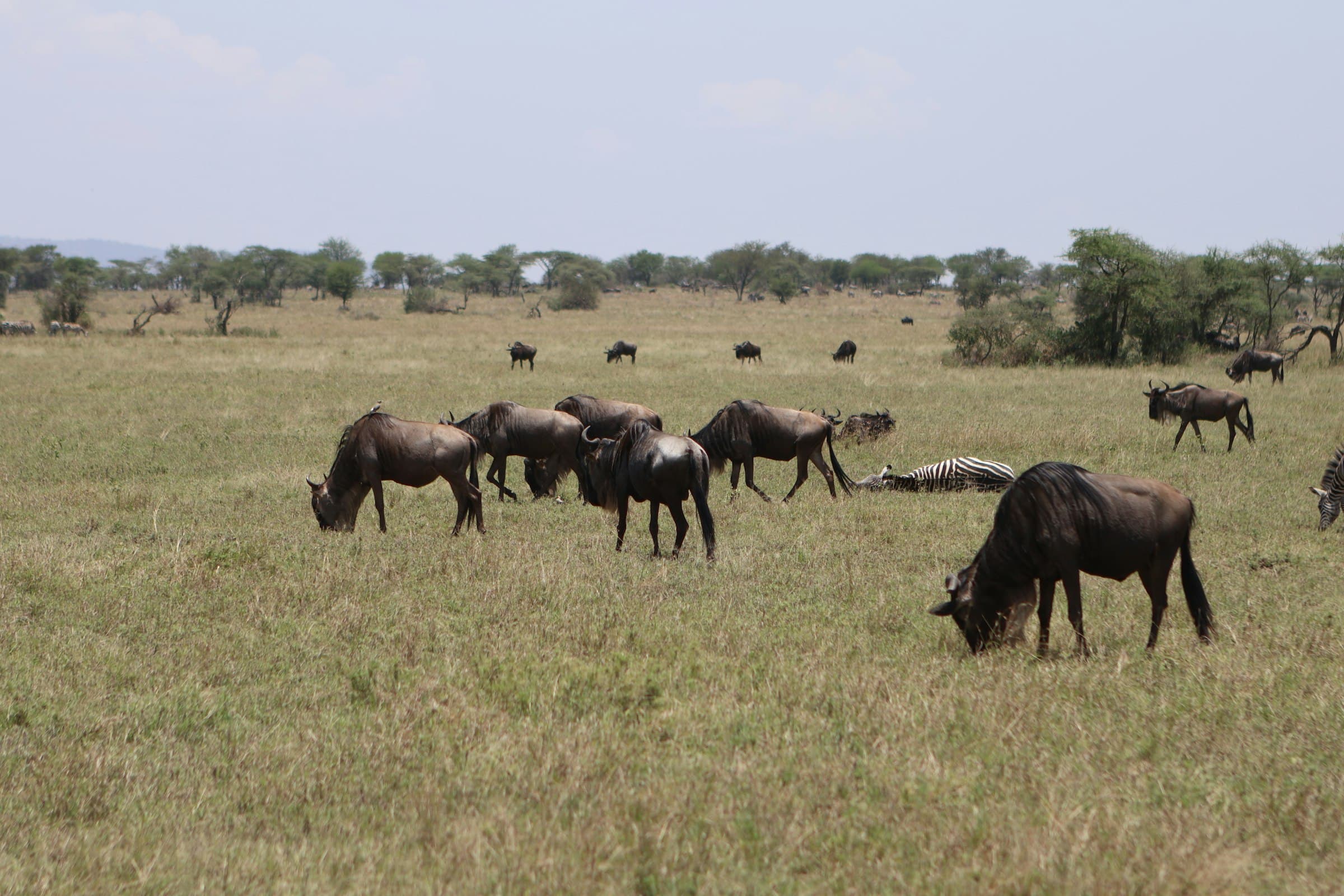
Close to two million wildebeest, plus large numbers of zebra and gazelle, move in response to fresh grass following rain, not a timetable. The general pattern holds year to year, but the exact weeks when herds reach the Mara river shift with the season's rainfall, sometimes by several weeks. Guides who track the herds daily are the best source of up-to-date positioning once you are in the region, and any month-by-month table should be read as a guide to likely regions rather than a guarantee.
Month-by-month guide
| Months | Typical herd location | What you're likely to see |
|---|---|---|
| December–February | Southern Serengeti, Ndutu area | Calving season, large concentrated herds, predator activity around newborns |
| March–April | Southern and central Serengeti | Herds begin moving north as grass is grazed down |
| May–June | Central and western Serengeti | Long lines of wildebeest heading north, the start of river crossings on the Grumeti |
| July–September | Northern Serengeti and Maasai Mara | Mara river crossings, the migration's most photographed phase |
| October–November | Maasai Mara and back toward Serengeti | Herds begin the return journey south as short rains start |
Choosing between the Serengeti and the Mara
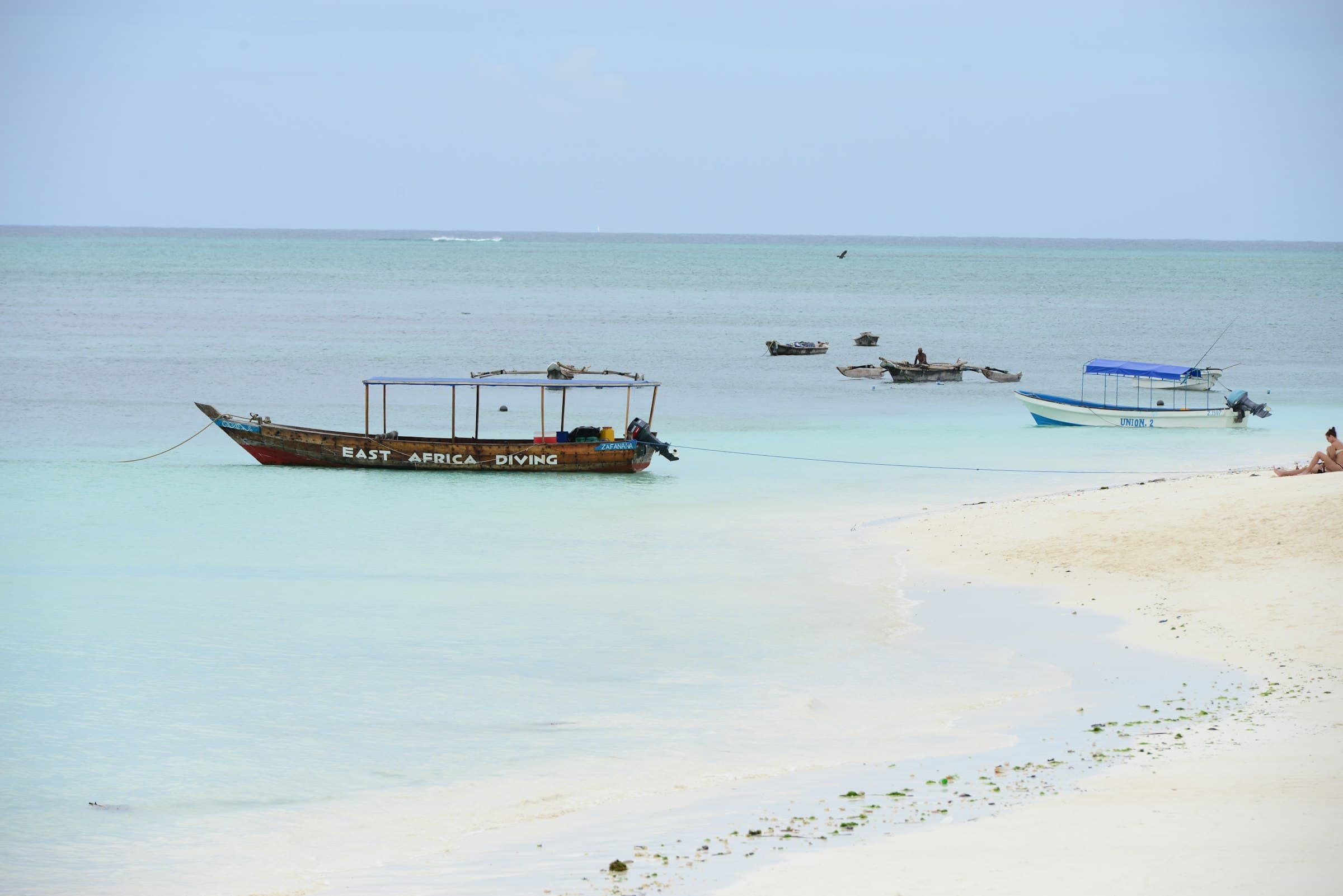
Both parks sit on the same migratory route, and the "right" one depends on timing more than preference. Travelers aiming for river crossings in the peak months often combine a stay in the northern Serengeti with a few nights in the Mara, since the herds cross back and forth across the border river during this period. A Serengeti and Zanzibar itinerary is a popular way to pair migration viewing with time to unwind afterward, and it's worth discussing your preferred months directly with a travel expert when you request a quote, since availability at camps near the river fills up well ahead of the peak crossing weeks.
What affects the timing
Rainfall is the main variable. A late start to the rains can delay calving and push the whole cycle back by weeks; an early, heavy wet season can accelerate the herds' movement north. Because of this, no source can promise an exact crossing date for a future trip. What experienced operators can do is track recent-year patterns and current conditions to recommend the months and camps that give you the best realistic chance of seeing a crossing.
Planning around the migration
- Build at least 4–5 nights near the likely migration zone if a river crossing is your priority, so you have more than one chance to be in the right place.
- Stay flexible on which specific camp you book until closer to travel, since positioning matters more than the property itself during crossing season.
- Pair migration viewing with a few days of downtime; after a series of early-morning game drives, many travelers add a beach extension.
- Bring the right gear; see our first safari packing list for a full checklist.
Wildlife beyond the wildebeest
The migration corridor supports resident predators year-round, so even outside the peak crossing weeks, the Serengeti and Maasai Mara offer strong game viewing. Lion, leopard and cheetah are present throughout the year, and the concentration of prey animals during calving season (December to February) draws significant predator activity even without a single migrating herd in sight.
FAQs
Is there a single "best month" for the migration? Not really. July through September is the most popular window for river crossings, but calving season from December to February is equally spectacular and typically less crowded.
Getting there
Most travelers fly into Nairobi or Kilimanjaro and connect via light aircraft to airstrips near the parks, which saves a full day of driving during a short trip. A travel expert can map out the right combination of parks, camps and connecting flights once they know your travel dates and how central the migration is to your trip.
Common mistakes to avoid
A frequent misconception is treating the migration like a scheduled event with a fixed start and end date. Travelers who book a single camp for two nights and expect a guaranteed crossing are sometimes disappointed, simply because the herds might be several days' drive away that week. Building flexibility into your itinerary, whether that's choosing a camp with easy access to several river crossing points or allowing extra nights in the region, meaningfully improves your odds. Another common mistake is focusing entirely on the crossing itself and overlooking the rest of the ecosystem; the days between crossings often bring quieter, equally memorable sightings of predators, elephants and birdlife that don't depend on the herds being nearby at all.
Photography considerations
If photography is a priority, timing within the day matters as much as timing within the year. Crossings can happen at any hour, but early morning and late afternoon light generally produces better images than the harsh overhead sun around midday. Guides who specialize in photographic safaris often position vehicles well ahead of an anticipated crossing and wait, sometimes for hours, so building slower-paced days into your itinerary rather than a packed schedule of multiple activities gives you a better chance of being in position when the moment happens.
How this fits into a broader itinerary
The migration is often the centerpiece of a longer trip rather than the whole of it. Many travelers pair several nights focused on the migration with time in a different ecosystem, such as the crater floor of Ngorongoro or the beaches of the Tanzanian coast, to balance the early starts and long game drives with a slower pace later in the trip. If you're planning around a specific set of travel dates, it's worth discussing both the likely herd positioning and how you'd like to balance activity and rest across the full trip when you speak with a travel expert.
Inspired? Let's plan it.
Tell us what caught your eye and a travel expert will design a trip around it.
Plan My TripAbout the author
SafiriFlow Travel Desk
Editorial team
Guides and itineraries researched and written by the SafiriFlow editorial team.