
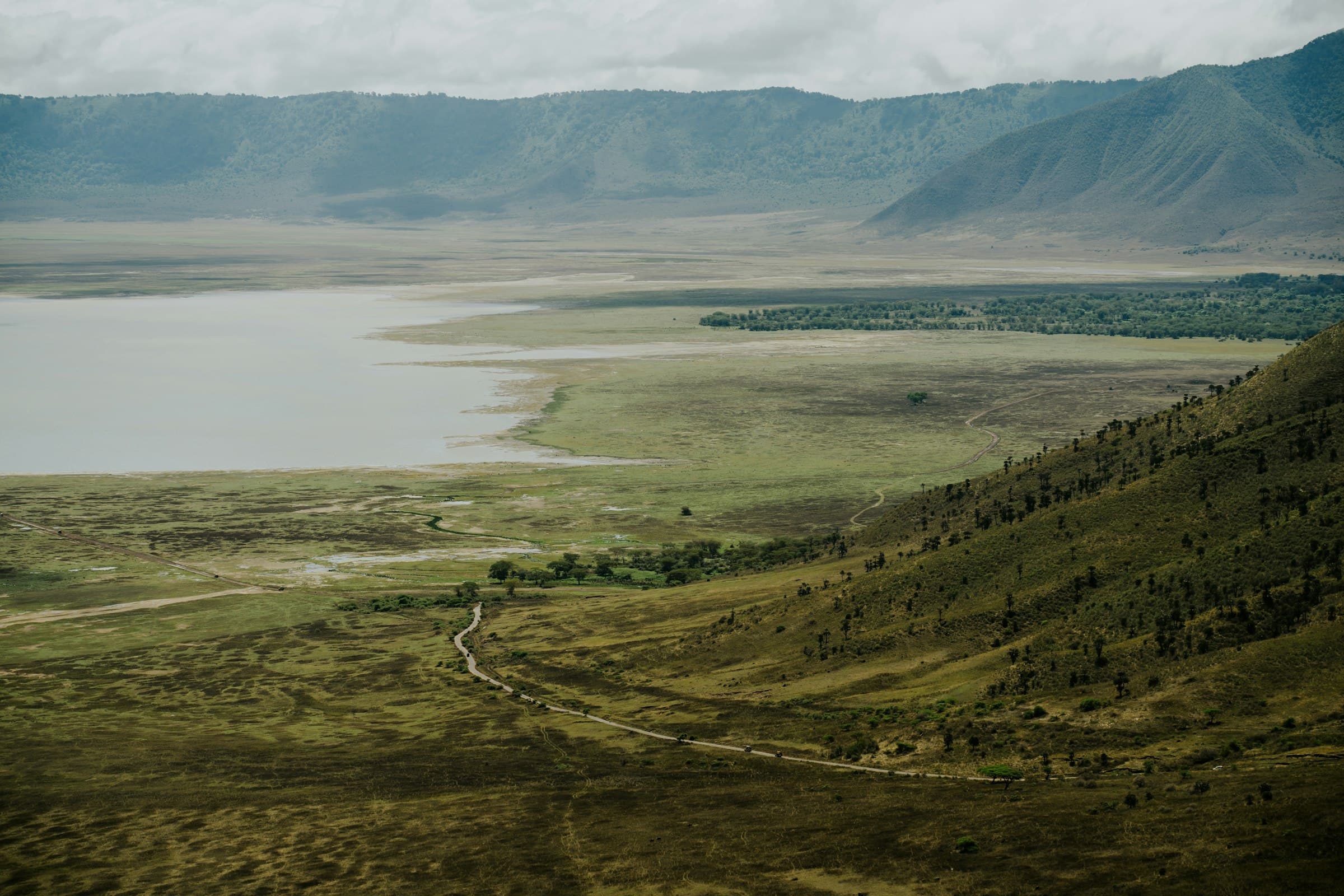
A wildlife-filled volcanic caldera on Tanzania's northern safari circuit
Ngorongoro Crater
Ngorongoro Crater packs resident wildlife, including black rhino, into a volcanic caldera, with Oldupai Gorge and the Ndutu plains nearby.
A caldera that holds its wildlife all year
Ngorongoro Crater is worth a day on almost any northern Tanzania safari. It is a collapsed volcano roughly 610 metres deep, and its floor of around 260 square kilometres mixes open grassland, swamp, the Lerai fever-tree forest and the shallow soda lake of Magadi. Much of the game here does not migrate, so a single well-timed game drive can take in buffalo, elephant, hippo, lion, hyena and zebra, and the crater is one of the places in Tanzania best known for black rhino.
More than the crater
The crater is the centrepiece of the Ngorongoro Conservation Area, a UNESCO World Heritage Site that runs west to the edge of the Serengeti. Unlike a national park, it is managed for people as well as wildlife, and Maasai pastoralists graze their livestock across the highlands. West of the crater, Oldupai (Olduvai) Gorge has a small museum beside the site where Mary and Louis Leakey's excavations uncovered some of the best-known early human fossils. To the north, Empakaai Crater holds a deep lake visited by flamingos and can be explored on foot from its rim. In the wet season, the short-grass plains around Ndutu, inside the conservation area, host the wildebeest calving that our migration guide follows month by month.
Planning a visit
Most travellers reach Ngorongoro by road from Arusha via Karatu, often between Tarangire or Lake Manyara and the Serengeti, and sleep on or near the rim. The rim is high and cool, and June to August are the coldest months, so bring warm layers for early starts. Gates open at 06:00 and close at 18:00, and the Seneto descent road closes at 16:00, so going down early gives you the most time on the crater floor before the midday light flattens and more vehicles arrive. Only four-wheel-drive vehicles may enter, off-road driving is not allowed, and every visit to the crater and to Oldupai must be accompanied by a licensed guide. Park fees are listed below, dated to the day we checked them.
Ngorongoro fits naturally into a wider Tanzania route. If you are looking at our Serengeti & Zanzibar itinerary, ask us about adding a night on the crater rim by road.
- Ngorongoro Conservation Area entry permit, non-East African adult (16+), one entry within 24 hours
- USD 70.80 per person (children under 16: USD 23.60; under 5 free)Checked Sep 29, 2026
- Ngorongoro Crater service fee, non-East African visitors, charged per vehicle for each trip into the crater
- USD 295 per vehicle per tripChecked Sep 29, 2026
Plan a trip to Ngorongoro Crater
Plan My TripWhen to go
The crater holds wildlife year-round, so there is no bad month for a game drive. The dry season from June to October brings easier roads and animals gathered near water, though June to August are cold on the rim. From December to March the Ndutu plains in the west of the conservation area host the wildebeest calving, and late February and March are especially good for it. The long rains of April and May make roads harder going and four-wheel drive essential.
Things to do
- 01
Game drive on the crater floor
Descend at first light for buffalo, elephant, lion and hippo around Lake Magadi, the Ngoitoktok springs and the Lerai forest, and scan the grassland for black rhino.
- 02
Visit Oldupai Gorge
Stop at the museum above the gorge where the Leakeys' excavations traced early human evolution; a guide is required to visit the excavation sites.
- 03
Walk the rim of Empakaai Crater
Hike down to a deep crater lake visited by flamingos, far from the vehicles on Ngorongoro's main floor.
- 04
See the calving at Ndutu
From December to March, the short-grass plains in the conservation area's west host the wildebeest calving and the predators that follow it.
FAQs
How long can you spend inside Ngorongoro Crater?
Gates open at 06:00 and all vehicles must be out by 18:00, and the Seneto descent closes at 16:00. The entry permit covers one entry within 24 hours, and the crater service fee is charged per vehicle for each trip down, so most visitors plan one long game drive rather than several short ones.
Do I need a guide to visit the crater?
Yes. The conservation area's rules require every visit to Ngorongoro Crater and to Oldupai Gorge to be accompanied by a licensed guide, and only four-wheel-drive vehicles carrying standard recovery equipment may go down.
Is Ngorongoro worth visiting if I am already going to the Serengeti?
For most travellers, yes. The Serengeti rewards time spent following the migration across a huge area, while the crater concentrates resident wildlife, including black rhino, into a compact space you can cover in a day. The road between Arusha and the Serengeti passes through the conservation area, so the two combine easily.
How cold does it get on the crater rim?
The rim sits high on the crater wall and nights and early mornings are cool all year. June, July and August are the coldest months, so pack a warm jacket for dawn descents.
You might also like
Ready for your next adventure?
Let's Plan Your Dream Trip
Whether you're looking for a weekend escape or an unforgettable journey, SafiriFlow can help you plan it.
Start Planning